Slate is one of the few flooring materials that looks better for a bit of age on it. Riven slate in a hallway, dark flagstones in a kitchen, a weathered hearth — they take a beating and keep going. What they won't do is clean themselves, and they're fussier than they look. Two things shorten the life of a slate floor: cleaning it with the wrong product, and leaving it unsealed so every spill soaks straight in. Get those right and the floor will outlast most of the furniture standing on it.
Not every slate floor is slate. Plenty of tiles sold as slate-effect are porcelain or ceramic with a printed surface. Those don't need sealing, won't absorb water, and are usually happy with a pH-neutral cleaner. The advice below is for the real thing.
Real slate arrives in two main finishes. Riven, or cleft, slate is split along its natural layers and has a rippled, uneven surface. Honed slate is machined smooth. Either can be sealed or unsealed, and the two behave very differently around water.
So run the water test. Put a few drops on an inconspicuous tile and watch what happens. If the water beads and sits there, the floor is sealed — at least for now. If it darkens the stone and disappears within a minute or two, it's porous and unprotected, and any red wine, cooking oil or muddy puddle is going straight in. Test in a few places: a hallway, a kitchen and the bathroom doorway may each tell a different story.
Most of the dirt on a slate floor is abrasive grit. That's what dulls the finish over years of foot traffic, so the single most useful thing you can do is get it off before it's trodden in.
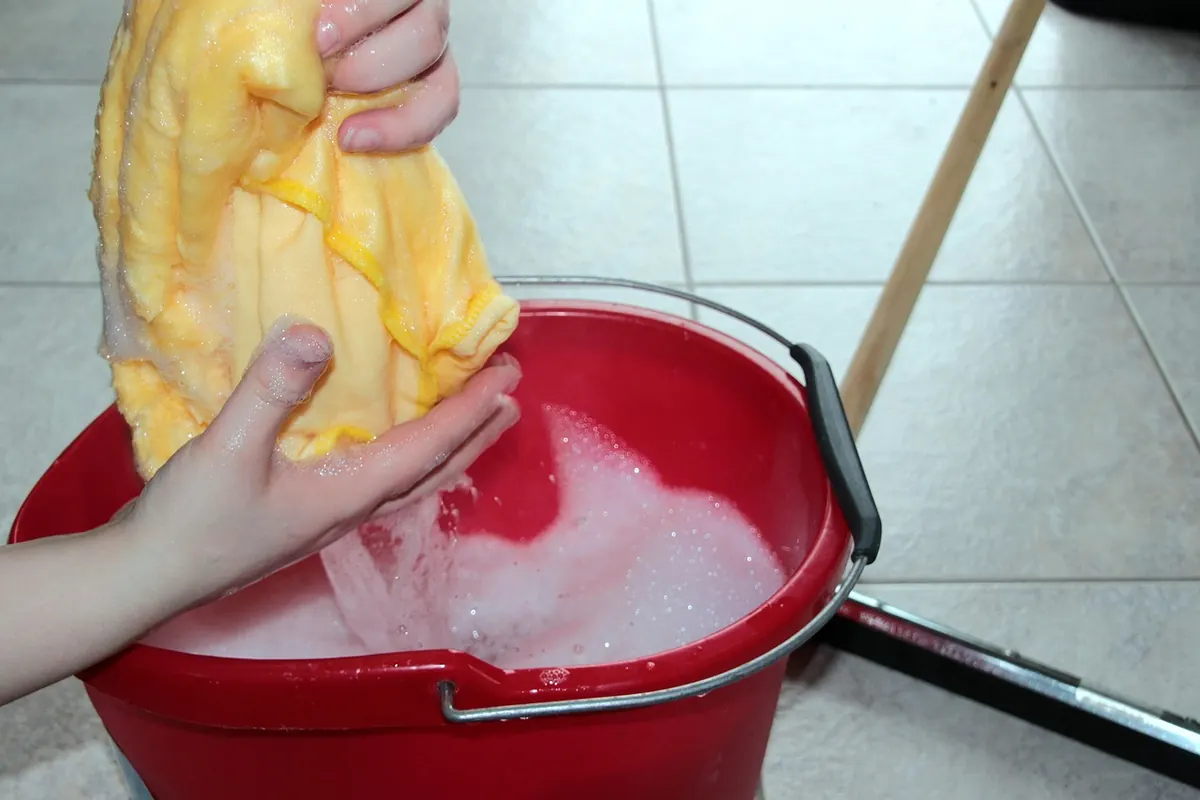
Sweep or vacuum busy rooms every day or two. Use a soft brush, or a vacuum on its hard-floor setting with the beater bar switched off — spinning brushes are kind to carpet and unkind to stone. Then damp-mop with a pH-neutral stone cleaner, using two buckets: one for the cleaning solution, one for the rinse. Wring the mop until it's barely damp. Slate and standing water are not friends, especially in an unsealed floor where moisture can work its way into the substrate and reappear as a chalky white bloom.
What you clean with matters as much as how often. Avoid these:
If the floor hasn't had proper attention in a while, or you've just moved in, work through it in this order:
If a white powdery bloom appears on the surface, that's efflorescence: moisture travelling up through the slab and depositing salts as it dries. Brush it off dry — never wet it — and if it keeps coming back, the problem is moisture underneath rather than dirt on top.
There are two families of product, and they do different jobs.
These soak into the stone and sit just below the surface, blocking the pores without forming a film. They leave the texture and most of the natural colour intact, which makes them the sensible choice for riven slate, kitchens and wet rooms. A matte penetrating sealer keeps the grip of the stone, which matters on a floor that gets splashed.
Acrylic and urethane coatings sit on top and add sheen. They're easy to clean, but on riven slate they pool in the dips, wear unevenly along traffic routes, and eventually need stripping back. On a smooth honed floor they behave far better. Be aware that a high-gloss film is noticeably more slippery when wet.
Colour-enhancing sealers deepen the tone and give that "just rained on" look. They can rescue a faded floor beautifully, but on dark slate they can go almost black, and they usually add slip. Buy a small tin, test it on a spare tile or in a hidden corner, and live with the result for a day before committing to the whole room. Whatever you choose, follow the manufacturer's instructions, ventilate properly and wear gloves.
Once the floor is clean and sealed, maintenance is straightforward. Put decent mats at every external door, fit felt pads to chair and table legs, wipe spills as they happen and damp-mop weekly with a pH-neutral cleaner. Every few months, drip water on a few tiles you don't look at often. If it beads, you're fine. If it soaks in, reseal before something stains, not afterwards.
For a large floor, a heavy build-up of old coatings or slate that has been worn uneven, it's worth paying a stone restoration firm to strip and reseal it properly. They'll get a finish you can't match with a roller and an afternoon, and the floor will then be far easier for you to keep on top of.
Photo: Myriams-Fotos / Pixabay