A hallway asks more of its floor than any other room in the house. It takes wet shoes, grit off the pavement, the bike wheel that comes in "just this once", and it does all of it in a space you cross a dozen times a day without ever looking down. Slate copes with that workload well — but only when you buy the right slate for the job. Here is what to weigh up before you order.
Most people choose slate for how it looks and think about grip afterwards. In a hallway, that is the wrong order. Rain, wet boots and a dropped set of keys are an ordinary Tuesday, and a smooth sealed surface that feels fine underfoot in summer can be genuinely treacherous in February.
Start with the R rating quoted by the supplier. R9 is generally intended for dry indoor areas, while R10 and R11 are aimed at floors that get wet underfoot. On commercial or rental projects the pendulum test value is often used instead, with 36 and above usually treated as low risk. Neither figure replaces the obvious test: get a sample, wet it, stand on it in the shoes you actually wear, and twist on the spot.
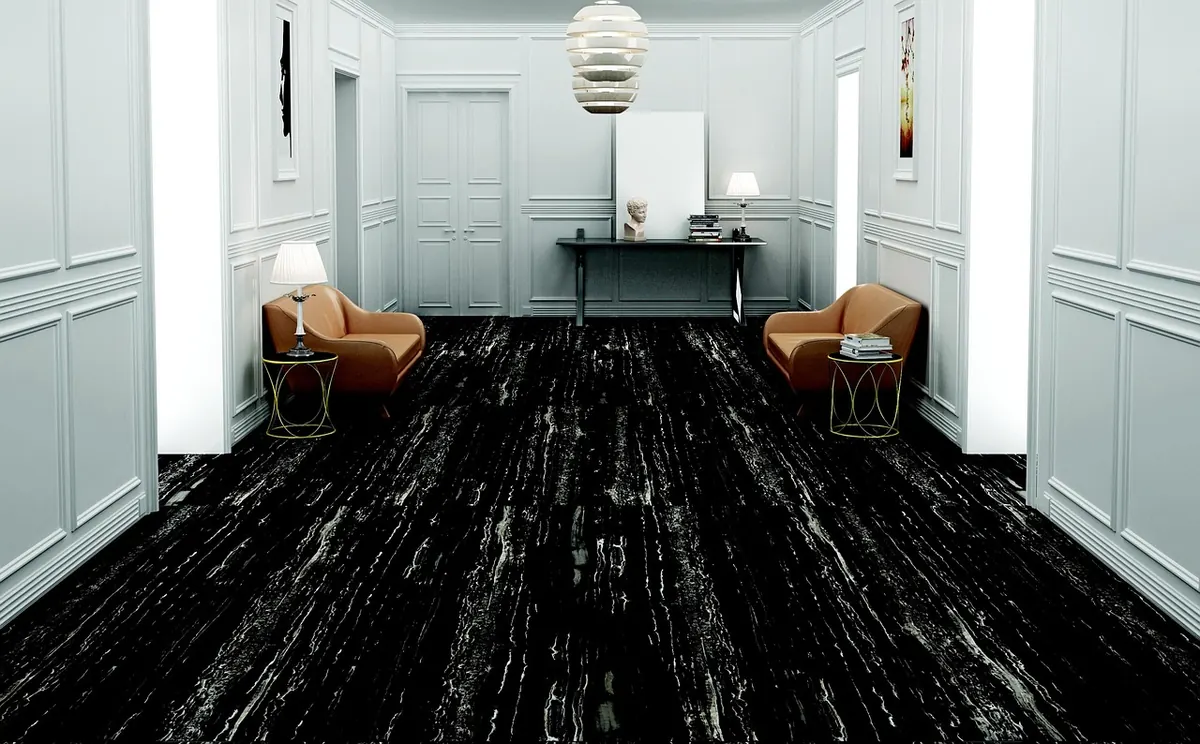
Texture does much of the work. Natural cleft and riven surfaces grip well because water has somewhere to go. Honed slate is smoother and still manageable if you control the grit and use a proper mat at the door. A high-gloss polish in a hallway is a style decision with a maintenance bill attached; if you go that way, plan for a long mat and a no-shoes rule.
Sealers change the feel of the surface too. Some leave an invisible film that turns slick when wet; others are formulated to preserve grip. Ask what the supplier recommends, and test it on a spare tile rather than on the finished floor.
For domestic hallways, slate usually arrives at 10–12mm, which is comfortable to lay and hard-wearing once bedded properly. Thinner tiles of 6–8mm can be fine on a perfectly flat, solid base, but they flex, chip at the edges and occasionally delaminate along the riven face. Reclaimed flagstone at 15–20mm looks wonderful and needs a subfloor that can carry the weight.
The distinction that matters most at the point of purchase is calibrated versus uncalibrated. Calibrated tiles have been ground to a consistent thickness, so they sit flush, take tighter joints and clean up easily — a real advantage in a hallway that sees heavy traffic. Uncalibrated or riven tiles are more rustic and need wider joints, and they are more likely to show lippage where one tile sits proud of its neighbour.
Underneath, stone needs a stiff floor. On timber joists, the usual guide for natural stone is that deflection should not exceed roughly 1/360 of the span. If in doubt, overboard with plywood or a cement-based board and consider an uncoupling membrane. Use a flexible cement-based adhesive — S1 or S2 for larger tiles or heated floors — and confirm with your supplier before pairing slate with underfloor heating, since stone conducts heat readily and the subfloor needs proper insulation beneath it.
Format matters as much as finish. Small tiles mean more grout lines, and in a hallway grout is where dirt collects. Larger tiles give a calmer surface that mops in seconds, though you will pay for the cutting around door frames and alcoves. Laying tiles lengthways down a narrow hall makes the space feel longer; running them across the width can steady an over-wide entrance.
Sweep or vacuum grit often — it is abrasive and dulls the surface faster than any cleaner. Mop with a pH-neutral stone cleaner diluted as directed, and change the water rather than pushing a grey slurry around. Avoid acidic products such as vinegar and lemon-based sprays, and skip bleach and steam mops on unsealed slate.
If the slate is sealed, reapply an impregnating sealer when water stops beading or the stone darkens quickly. High-traffic strips — the doorway, the route to the kitchen — will want attention first. Blot oil, wine and ink immediately; slate varies in porosity, so some tiles stain more readily than others. White bloom after a damp spell is usually efflorescence and normally dries back with ventilation and a dry brush.
If you live in a flat or a listed building, check your lease or speak to the local authority before altering thresholds or subfloors, and take professional advice on structural and heating questions rather than guessing.
Order a sample, live with it for a week and wet it. Insist on tiles from a single batch where possible, because slate varies in colour and cleanness between quarry runs. Add around ten per cent to your order for cuts and breakages, and keep two or three spares in the loft — matching a hallway floor two years later is far harder than storing a box.
Let the tiles acclimatise in the room for a day or two, decide with your fitter whether to seal before or after grouting, and have the subfloor checked by someone who can actually see it. Do that, and a slate hallway will outlast every other floor in the house — quietly, and without asking for much.
Photo: 2814052 / Pixabay